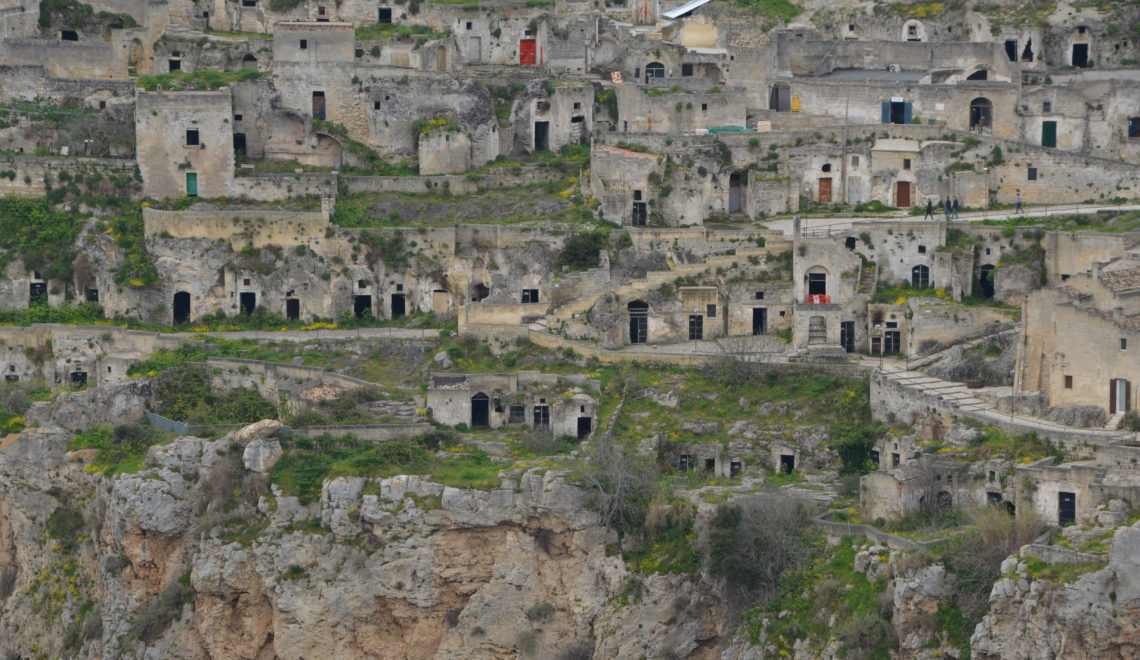
In 1993, UNESCO declares the World Heritage Sites of Matera. On October 17th, 2014, Matera was designated European Capital of Culture for 2019
Matera is in the center of an incredible rock landscape that retains a great heritage of culture and traditions. It is home to national and international prestigious exhibition events.
But in the past it was considered in a different way … The Sassi of Matera were the “shame of Italy”. The poverty, the degradation and the inhuman living conditions of this place were described by Carlo Levi in his book “Christ stopped at Eboli”. Below an excerpt of this beautiful book:
(…) I found a street with a row of houses on one side and on the other a deep gully. In the gully lay Matera.(…)
The gully had a strange shape: it was formed by two half -funnels, side by side, separated by a narrow spur and meeting at the bottom, where I could see a white church, Santa Maria de Idris, which looked half -sunk in the ground. The two funnels, I learned, were called Sasso Caveoso and Sasso Barisano. They were like a schoolboy’s idea of Dante’s Inferno. And, like Dante, I too began to go down from circle to circle, by a sort of mule path leading to the bottom.
The narrow path wound its way down and around, passing over the roofs of the houses, if houses they could be called. They were caves, dug into the hardened clay walls of the gully, each with its own fagade, some of which were quite handsome, with eighteenth-century ornamentation. These false fronts, because of the slope of the gully, were flat against its side at the bottom, but at the top they protruded, and the alleys in the narrow space between them and the hillside did double service: they were a roadway for those who came out of their houses from above and a roof for those who lived beneath. The houses were open on account of the heat, and as I went by I could see into the caves, whose only light came in through the front doors.
Some of them had no entrance but a trapdoor and ladder. In these dark holes with walls cut out of the earth I saw a few pieces of miserable furniture, beds, and some ragged clothes hanging up to dry. On the floor lays dogs, sheep, goats, and pigs. Most families have just one cave to live in and there they sleep all together; men, women, children, and animals. This is how twenty thousand people live.
“Of children I saw an infinite number. They appeared from everywhere, in the dust and heat, amid the flies, stark naked or clothed in rags ; I have never in all my life seen such a picture of poverty. (…).
from “Christ stopped at Eboli” by Carlo Levi
A shame that had to be canceled. Thus the Italian government ordered the displacement of the Sassi (1952), with the transfer of all their inhabitants to new buildings in new residential areas. The Sassi became a ghost town. Only in 1986 with a special law, the government allowed the inhabitants to return to the Sassi by supporting them in their retraining.
This project has given the expected results, with the consecration given by UNESCO.
In last ten years, the Sassi of Matera has been visited yearly by thousands of people. It has been declared the second best tourist destination in the world according to the Trivago Global Reputation Ranking survey. Matera’s international fame has also grown thank to the films that have played in this city. (Passion of Christ directed by Mel Gibson, Ben Hur directed by Timur Bekmambetov).
Among the tourists who have been fascinated by this city, there is my name too. It was one of those destinations that I have always wanted to visit, but due to the distance and to the lack of free time I have always postponed this trip.
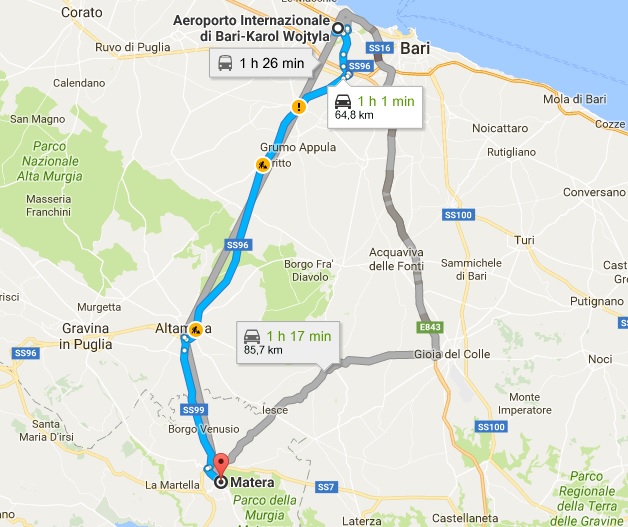
Until one day I decided to plan a weekend with friends to visit it. Nowadays it’s easy to reach Matera. From Bari Airport It takes one hour by car. We rented a car, and arrived in the city in the afternoon. At the first sight the city (the new part) it isn’t so impressive… a “normal” city. But when I went over the gully where the Sassi are perched the view changed … it became incredible.
The new city is at the top of this gully, so the view from above is spectacular. We took a tour guide to visit the two “districts” (Sasso Barisano and Sasso Caveoso). In my opinion a guide is necessary in order to know all the secrets hidden in this place. The visit was very interesting and allowed us to relive the times when these caves, which are excavated in limestone rock (calcarenite), were houses… where humans and animals lived togheter.
In ancient times, these caves had been excavated as rainwater collecting tanks. All of these tanks connected to each other provided the necessary water for the population. On the other side of the gully there are the ancient settlements and you can see the water collecting systems that filled these tanks.

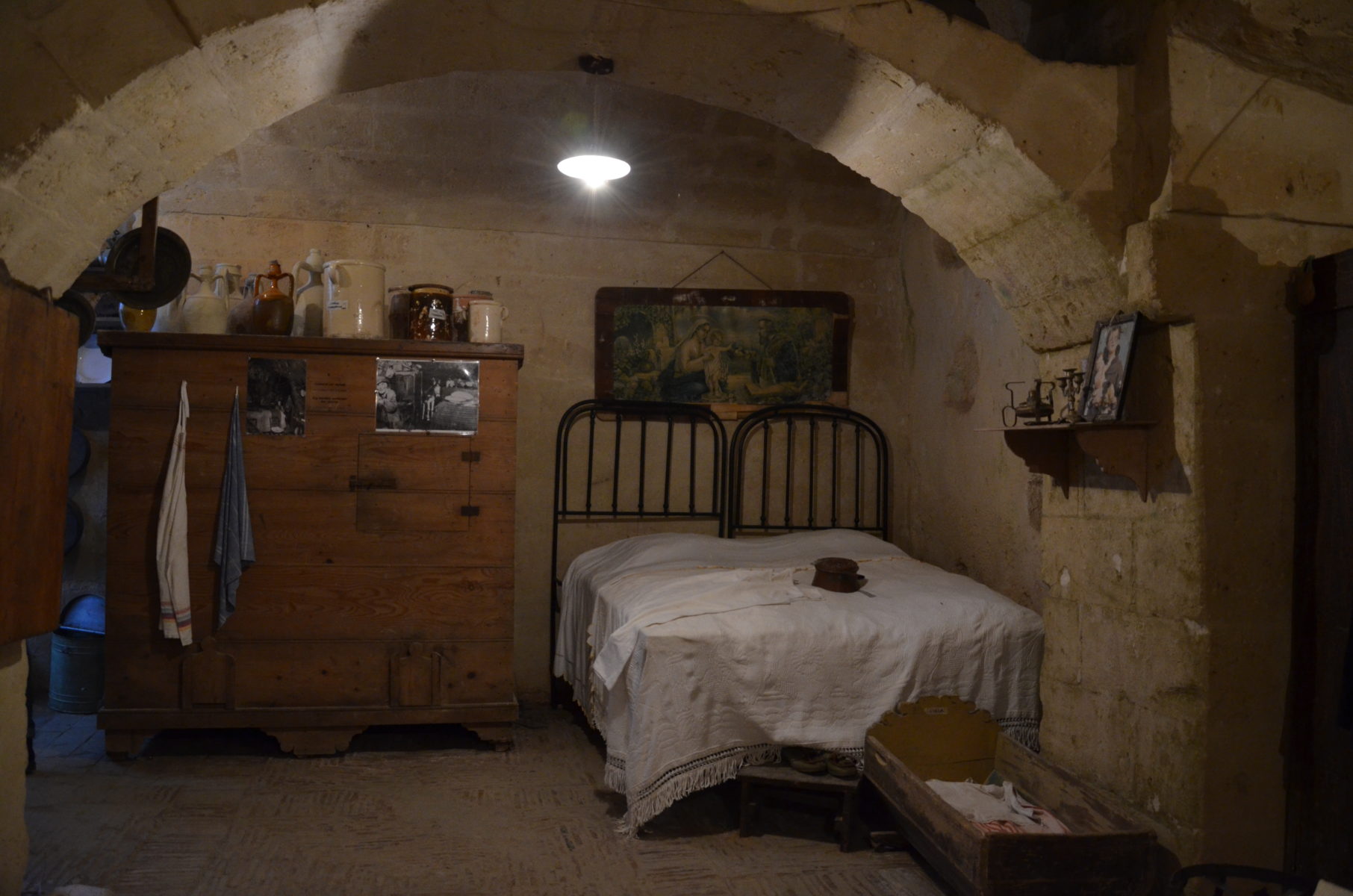
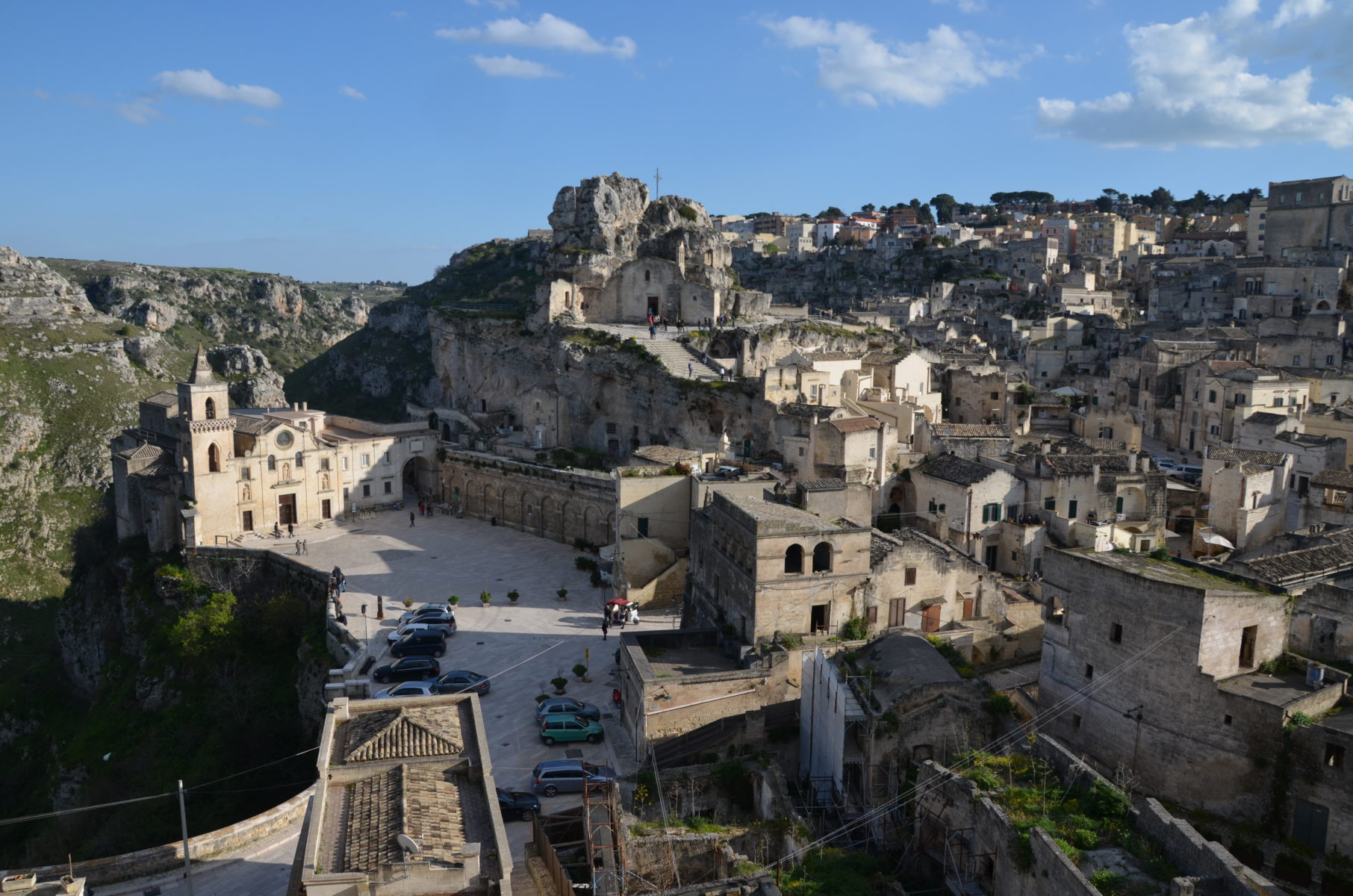
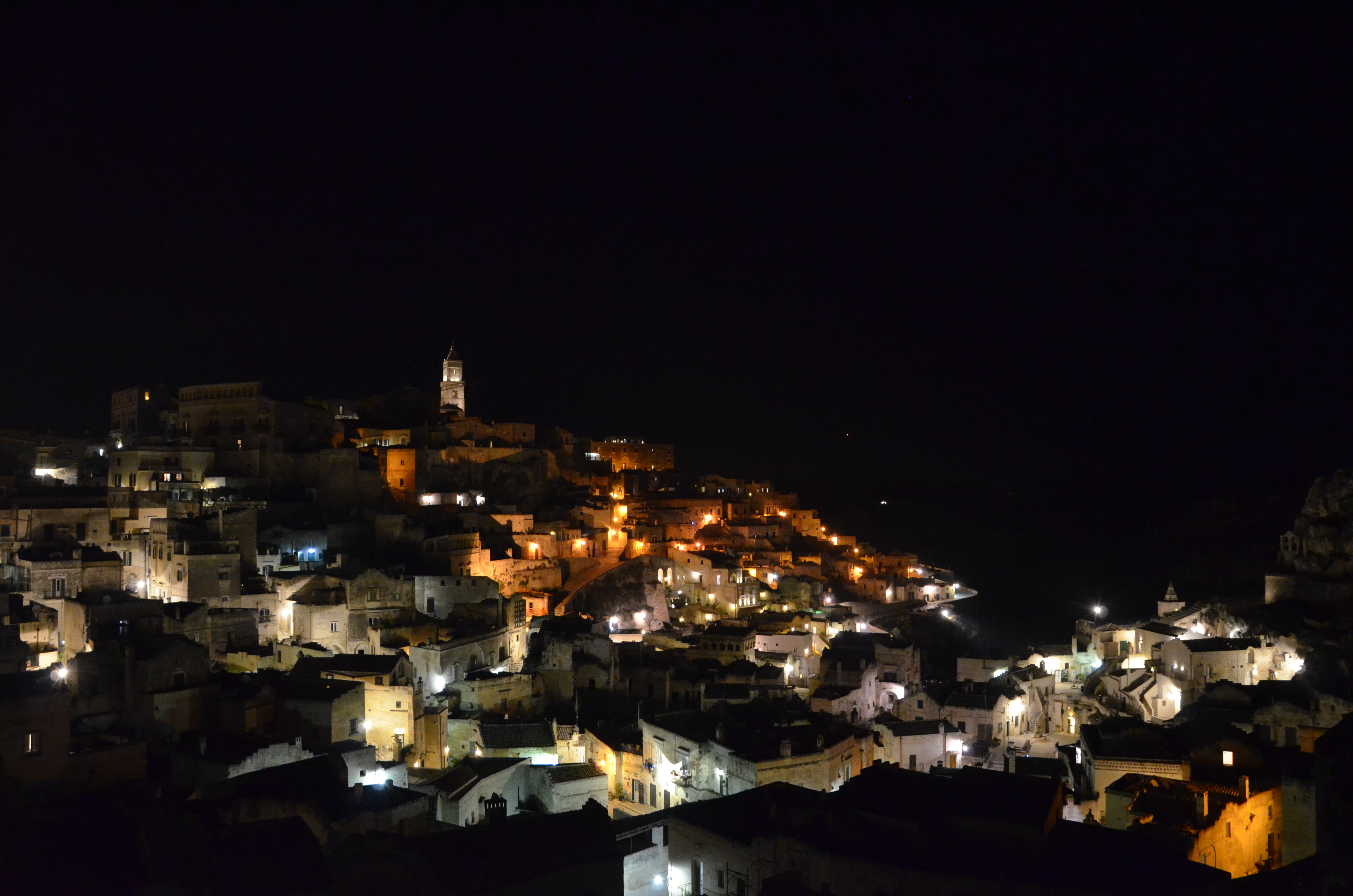

The visit lasted about two hours. The local guide was very nice and competent because he witnessed previous life in Sassi. The presence of many ancient churches in these caves is important. One thing strucked me: the burial places. Since the Sassi develop from the top of the new city down to the gully … every cave has been excavated upon another… as in a big hive. It is the same for churches too, so cemeteries were often on top of other caves (which therefore have tombs on the roof …).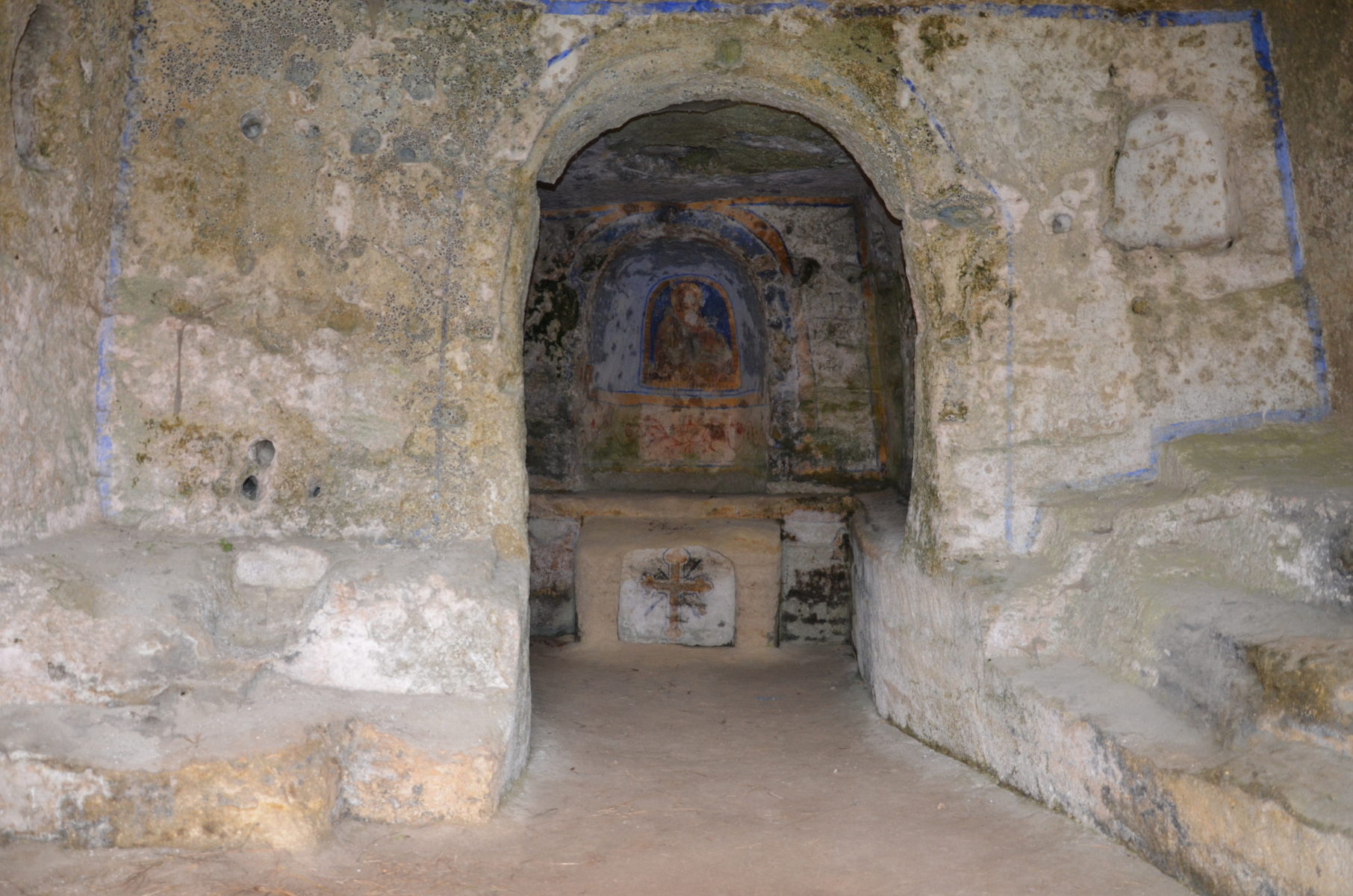
Today, the infernal circle depicted by Carlo Levi has become a crib that, during the night, helped by the lighting system, is even more scenic. The qualification process, thanks to state and private funding, has transformed these caves into luxury bed & breakfasts, restaurants and characteristic venues. The locals are very few.
I wanted to sleep in a Sasso for this reason I booked a Bed&Breakfast on booking.com which had very high reviews. The Dimora di Metello. It was simply fantastic, restored and nicely furnished. I recommend to those who want to sleep in caves to book some months ahead. The rooms are not so many and if you do not book in time you will only find rooms with exorbitant prices.
 Obviously even the restaurant we booked was in a cave which was very deep and consisting of many caves connected with each other. Every cistern was a restaurant hall. Very particular.
The food is on average very good as well as the Aglianico delle Volture: the typical wine of this area.
You can visit Matera in two days. In addition you can also use it as a base to reach some Ionian Sea tourist sites or to reach the Alta Murgia park for some excursions.
Matera is also known for its bread. Like Altamura’s most famous one, it is made of a large loaf (even 5 kg) with crunchy crust and soft inside. Its characteristic was to last for some days as in the past each family took only one each week.
In conclusion Matera really impressed me. I do not know when… but I’d like to come back there with my sons. To show them a unique scenario, witnessing a split of Italy that new generations probably could not even imagine.
Useful Information
Nearest Airport: Bari International Airport – BRI ( 66 km far from Matera)
Low Cost Airlines operating on these Airport: Ryanair, Easyjet, Wizzair, Airberlin, Vueling, Freebird, Transavia, Albastar, Volotea, Eurowings
Tourist Information:
Route Map.
Other places of interest near Matera: Altamura, Alta Murgia Park, Bari, Barletta, Bisceglie, Lido di Metaponto, Policoro
[wpgmza id=”1″]