One of the most beautiful ways to visit Italy is through the “Cammini” (trails). The Via Francigena is definitely one of the most beautiful and fascinating.
The Via Francigena is part of a network of routes, also known as “vie romee” (pilgrim routes), that led from Western Europe, particularly France, to Southern Europe, up to Rome, and then continuing towards Puglia, where there were the embarkation ports for the Holy Land.
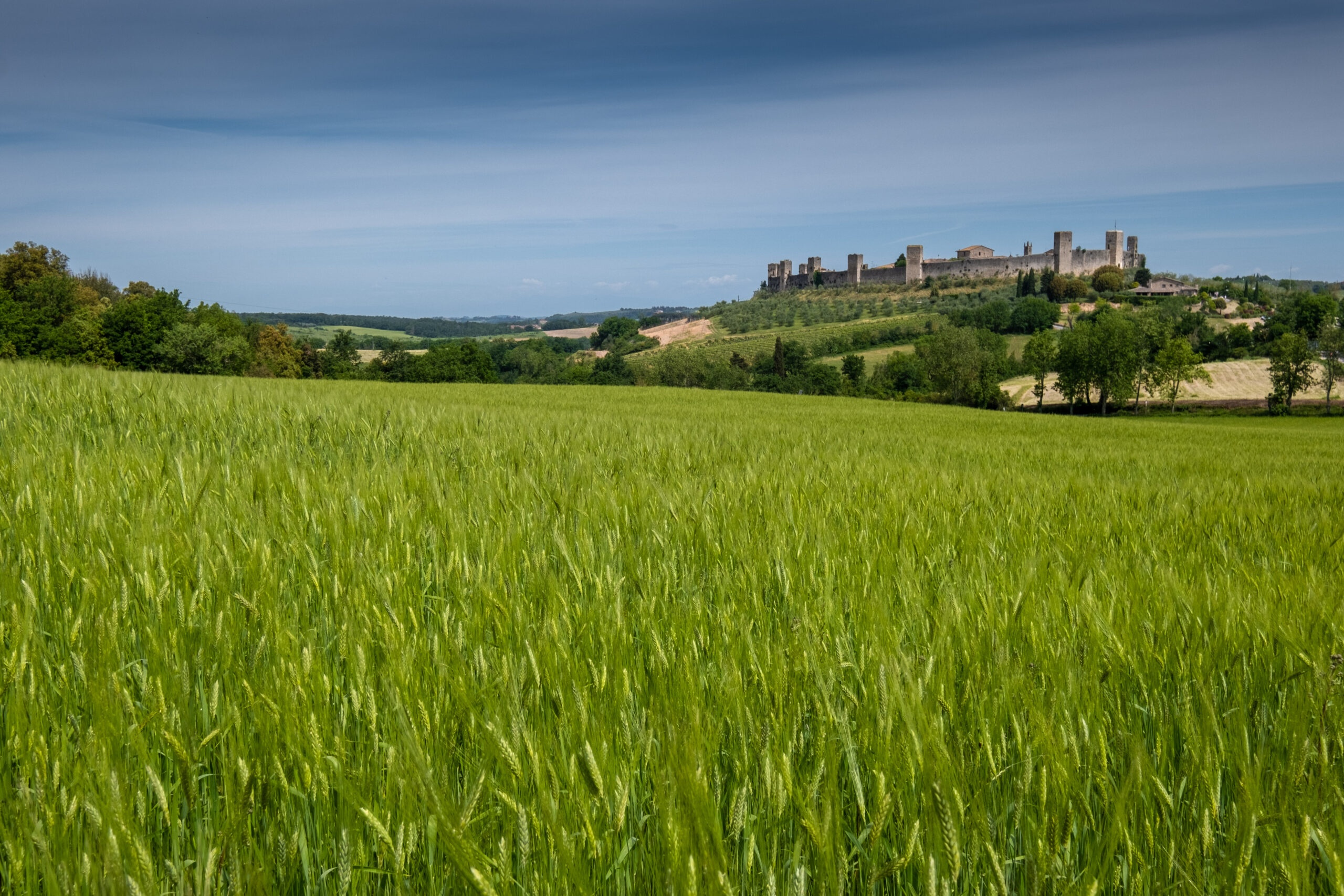
Among the stages that have always attracted me the most are definitely those in Tuscany. With a group of friends, we decided to walk the 33rd stage, from Monteriggioni to Siena. This stage is a route of about 20 km that winds through the marvelous Tuscan hills. It is an itinerary of about 5 hours of walking, mostly on dirt roads, with an elevation gain of about 350 meters. The stage from Monteriggioni to Siena is a relatively easy route, suitable for all walkers. However, it is important to be well equipped, wearing comfortable shoes and bringing enough water and food with you. There are not many refreshment points along the route, so it is advisable to plan for everything you need.
The walk was really beautiful, although to be honest, quite tiring for me. As mentioned before, the route is of low difficulty, but the fact that we did it in the summer with a late morning start was a bit reckless. After 5 hours of walking under the sun, making the last climb to reach Piazza del Campo made my legs give way. But in any case, the fatigue was rewarded by the landscape and the historical evidence encountered along the way.
On the website (Le Vie Francigene) it is possible to gather all the information to follow this and the other stages of this journey.
However, below I provide a summary description of what we did and the points of interest encountered along the way.
Departure from Monteriggioni
We start from the charming Piazza Roma, in the heart of Monteriggioni, a medieval village surrounded by perfectly preserved walls. After admiring its beauty, we leave the town and immediately immerse ourselves in the typical landscape of the Tuscan countryside, characterized by rolling hills, rows of cypress trees, and ancient villages.

Towards Cerbaia
The path continues along white roads, crossing the Montagnola Senese, an area rich in woods and history. We then reach Cerbaia, an ancient medieval village now in a state of abandonment, but which still retains its charm. Here it is possible to admire the remains of the castle and the church, evidence of a glorious past.
Castles and Villas
After Cerbaia, we continue walking through woods and fields, passing some castles, including the suggestive Chiocciola castle, and historic villas, symbols of a now disappeared aristocracy.
Pian del Lago and the Hermitage of San Leonardo al Lago
We then descend towards Pian del Lago, a flat area once occupied by a lake, now reclaimed. Here it is advisable to make a small detour to visit the Hermitage of San Leonardo al Lago, a place of peace and spirituality that offers a panoramic view of the surrounding landscape.
The Renai Forest
We resume the journey crossing the Renai forest, a protected natural area where it is possible to admire different species of plants and animals.
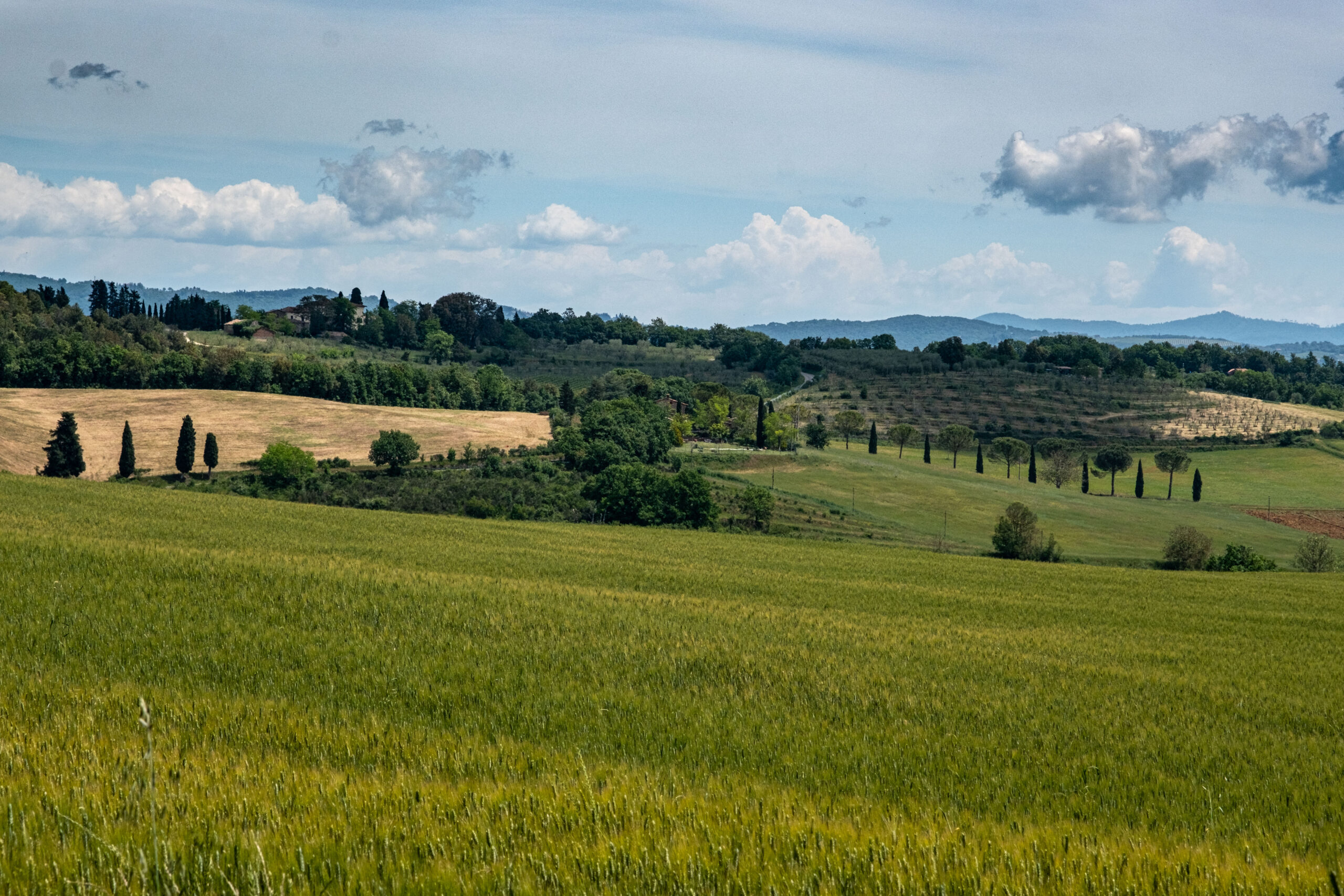
Leonardo’s landscape
Arrival in Siena
Finally, we arrive in Siena, one of the most beautiful cities in Italy, famous for its Piazza del Campo, the Duomo, and the Palazzo Pubblico. The entrance to Siena is through Porta Camollia, one of the ancient gates of the city. From here you can easily reach the historic center and admire its artistic and architectural wonders.
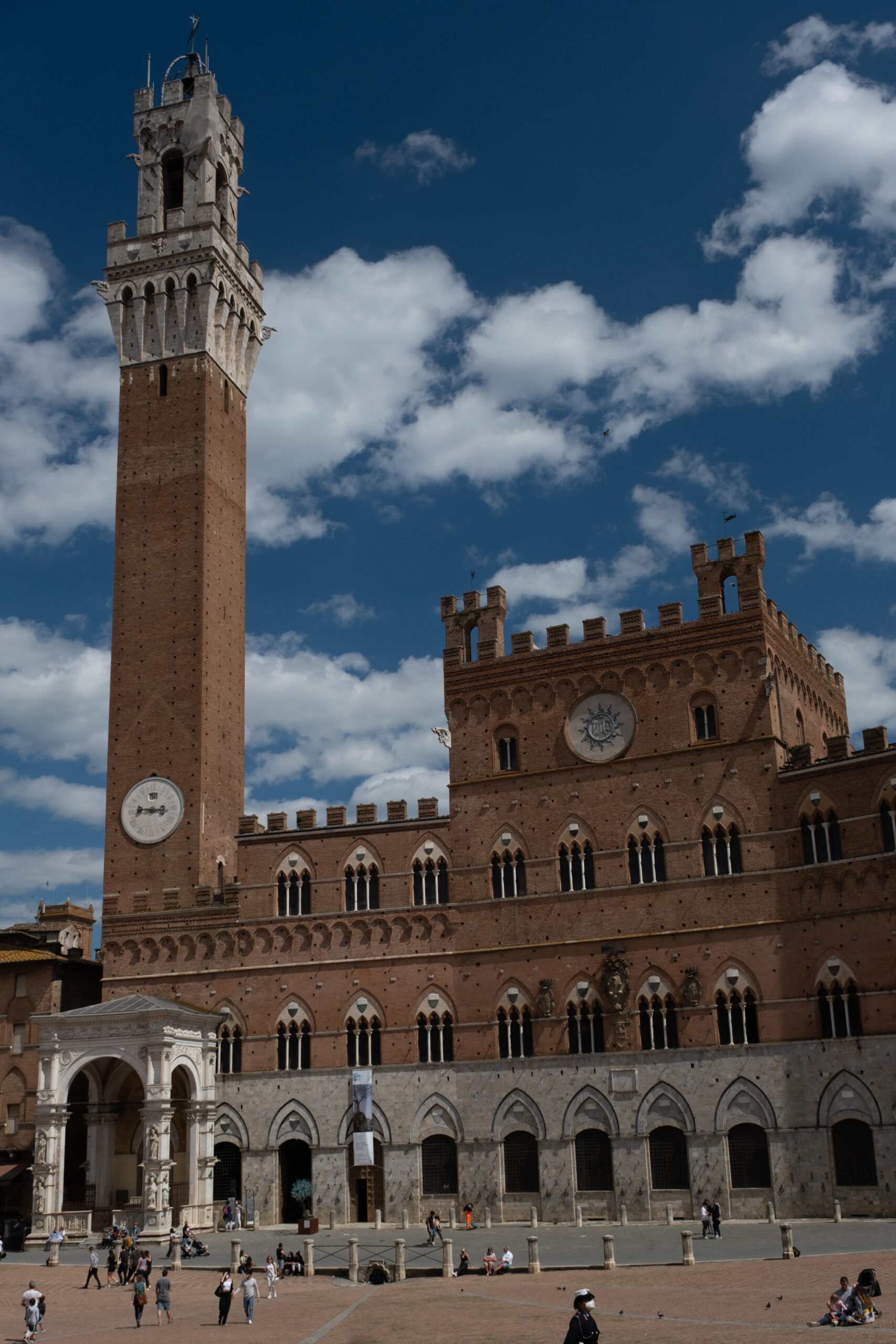
Palazzo Pubblico – Siena
Happy walking!